
Stay ahead with the inics blog
We regularly publish insightful articles on key topics related to data management, business intelligence, and data analytics—keeping you informed and ahead of industry trends.

The AI Result Looks Good. Now Who Signs It Off?
There is a moment in BI projects that everybody knows. The report is built. The dashboard looks fine. The first review starts. And then someone from the business says: "That number is wrong." Nobody enjoys that moment, but at least it gives the project something concrete.
AI Sovereignty Is a Stack, Not a Slogan
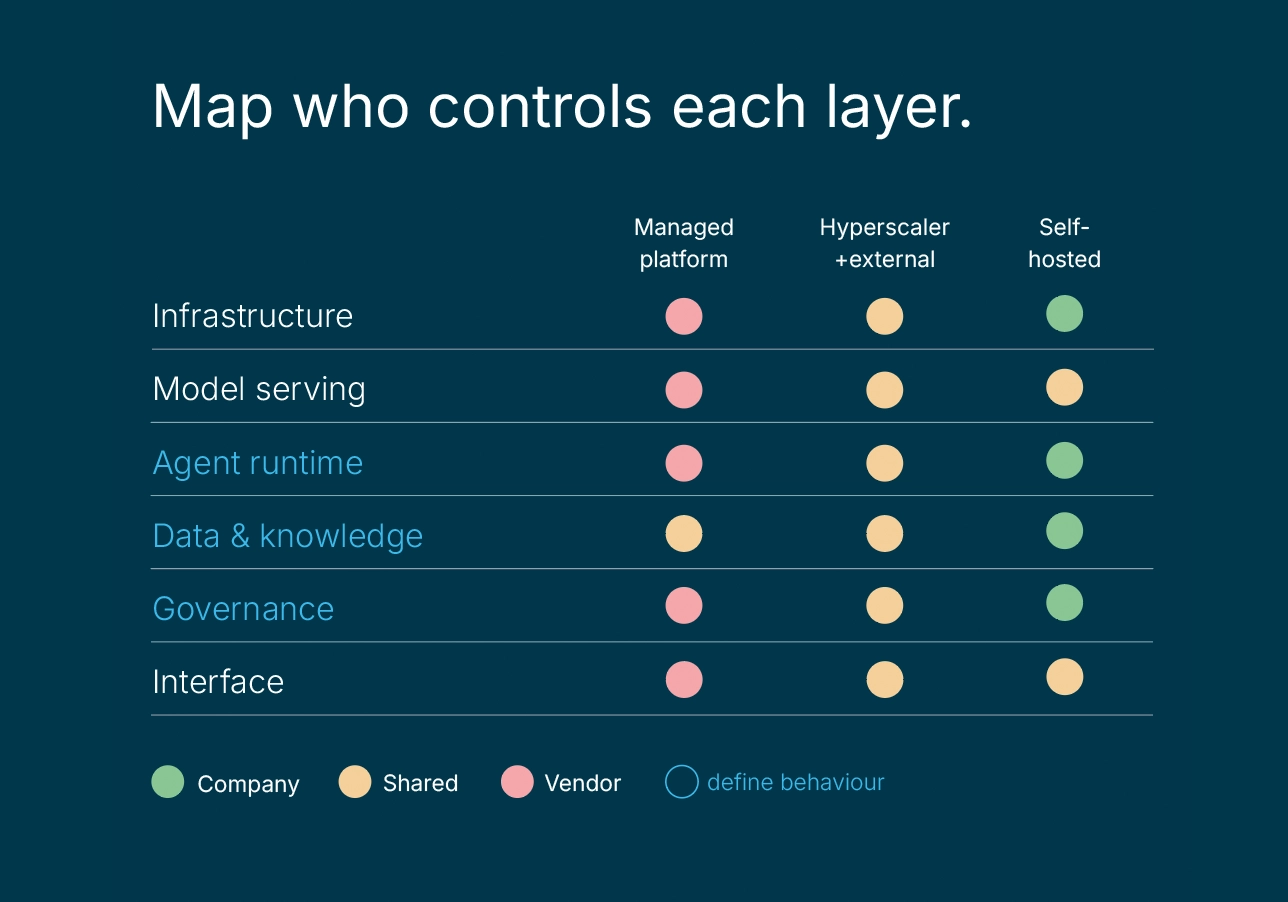
A few days ago, the abstract debate about AI sovereignty stopped being abstract. When an export-control directive required Anthropic to suspend access to Fable 5 and Mythos 5 for foreign nationals, Anthropic said the practical effect was that it had to disable both models for all customers to comply. Model availability had become a policy dependency overnight. Not because of price. Not because of a contract dispute. Because one layer of the stack moved. That is the sovereignty debate, compressed into one weekend.

From Insight Risk to Action Risk: Why Agentic Analytics Changes What Governance Is For
In classical BI, weak governance was a reporting problem. In agentic analytics, it becomes an execution problem. That single shift changes what governance is for - and where organisations need to start before they scale AI.

The Analytics Agent Already Works in Your Company
The problem is that most of its knowledge is still in someone’s head. In many companies, the closest thing to an analytics agent is still a person. The analyst who knows which dashboard people actually trust. The controller who remembers why one margin definition is dangerous. The BI consultant who has seen the same simple metric mean three different things across three source systems. The data engineer who knows which table exists, and why it should still not be used for the question someone is asking.
From Reporting to Decision Support - Why adaptive orientation matters when KPI autopilot fails
Too often, it was treated as if enough data, enough dashboards, and enough automation would eventually make decisions almost self-executing. That was always too simplistic. But once you stop confusing data-driven work with decision automation, the real question becomes much more practical: "What actually helps an organisation make better decisions when the old reading model starts to weaken?"

Data-Driven Decision Making: What It Really Means When the Environment Stops Behaving
Part 1: Why “data-driven” was often mistaken for decision automation, and why the real challenge is deciding whether your current signals still capture enough of reality to guide action.
Data Mesh, Data Meh? Why Many Companies Need to Reassess Their BI- and Data Organization
A few years ago, Data Mesh was, for many companies, above all a compelling target vision. More ownership in the domains, fewer central bottlenecks, more product thinking, more scalability. On strategy slides, it sounded modern, ambitious, and long overdue.
AI Use Case Inventory and Governance - Portfolio, Roles, Obligations
Part 3/3 concludes the series with the question that, in practice, often needs to be answered first:
Traceability by Design: Auditability Is Architecture, Not Documentation
Part 2/3 of the EU AI Act Series In Part 1, we focused on data quality. Part 2 builds on that. Because even with good data, the same question almost always arises in practice: