
Decision Confidence for complex
data landscapes
inics helps companies assess complex data landscapes, prepare sound decisions
and make implementation work in practice.


When the right decision matters more than the next project
Unclear
platform decision
The decision is on the table, but criteria, consequences and responsibilities are not yet clearly comparable.
Prepare the decisionIneffective
project
The project is running, but confidence in direction
and outcomes is declining.
AI without a
reliable basis
AI is on the agenda, but use cases, the data basis
and feasibility are not yet reliably validated.
Legacy
complexity
The landscape keeps growing, and every decision becomes slower and riskier.
Assess complexityThree starting points
when the way forward is unclear
Not every situation needs the next immediate initiative.
Sometimes it needs the right starting point first:
assess the architecture, prepare the decision or stabilise the project.
Architecture
Review
Assesses architecture,
risks and options.
Outcome: Architecture picture
and prioritised options.
Decision
Session
Brings structure to complex decisions.
Outcome: Decision matrix
and way forward.
Rescue
Review
Gets stalled projects moving again.
Outcome: Root-cause picture and stabilisation path.
Stabilise the projectTechnical expertise in BI, platforms, and AI
How uncertainty turns into a reliable next step

Assess the
current situation
make risks visible

Structure
the options
clarify priorities

Prepare the
next step
so it holds up in practice
From decision pressure to reliable implementation
We prepare decisions so they also hold up during implementation. If needed, we support implementation through architecture, stabilisation and operations.
• Architecture & data platforms
• BI & analytics
• Stabilisation & modernisation
After the assessment: implementation
Trust is built where decisions
hold up in practice






Analytics migration
- licence costs halved
Azure/Databricks migration in 6 months, a 50 % reduction in licence costs and a modern foundation for analytics and AI applications.
Read the success story
BI modernisation
– from concept to operations
Qlik/SAP BI environment modernised, usage increased from 50 to 900 daily users, and operations stabilised for the long term.
Read the success storyWhat our clients say
"inics proved their capability to successfully take over BI projects from other providers. Thanks to their extensive experience and competence, our Qlik project was completed successfully, to everyone's satisfaction."
Nico Alf, Team lead international Controlling and Foundation Management, Zoological Society Frankfurt

"inics' strategic guidance was essential in fully realizing our business intelligence potential. This enabled us to optimize previously overlooked processes and make better decisions aligned with our corporate goals, leading to significant monetary and qualitative improvements."
Stefan Schnarr, BI/CRM Team Leader - Adler Modemärkte

"inics proved their capability to successfully take over BI projects from other providers. Thanks to their extensive experience and competence, our Qlik project was completed successfully, to everyone's satisfaction."
Nico Alf, Team lead international Controlling and Foundation Management, Zoological Society Frankfurt

„Thanks to the expertise and dedicated support from inics, our BI environment has significantly enhanced, becoming highly stable, scalable, and reliable.“
Christian Zander, Head of Reporting & Data Analytics, KiK

„The partnership with inics transformed our BI landscape, significantly reducing costs and establishing an innovative platform for future digital and AI initiatives. We see inics as strategic digital evangelists.“
Luka Bebensee, Operations Partner - Head of Quantoo/TMG
First assess.
Then choose the right way forward.
When data, platform or AI decisions become difficult , or projects do not deliver the expected impact,
we help identify which starting point makes sense now.

Thomas Howert
Co-Founder & Senior Advisor for BI, data projects, and technology decisions


Stay up-to-date with our knowledge portal!
Regularly discover new contributions on the latest developments in data analysis, business intelligence and current trends.
The AI Result Looks Good. Now Who Signs It Off?
There is a moment in BI projects that everybody knows. The report is built. The dashboard looks fine. The first review starts. And then someone from the business says: "That number is wrong." Nobody enjoys that moment, but at least it gives the project something concrete.
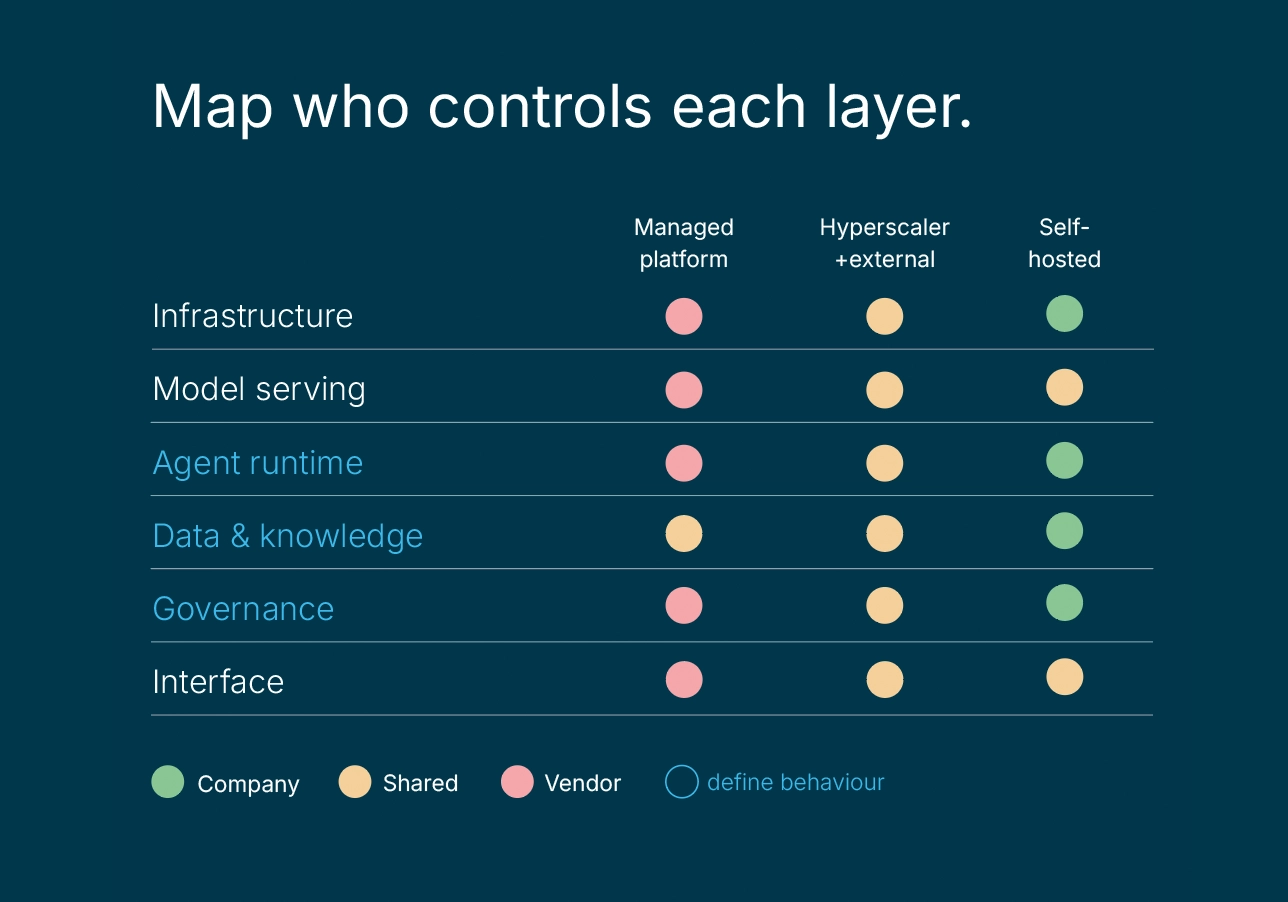
AI Sovereignty Is a Stack, Not a Slogan
A few days ago, the abstract debate about AI sovereignty stopped being abstract. When an export-control directive required Anthropic to suspend access to Fable 5 and Mythos 5 for foreign nationals, Anthropic said the practical effect was that it had to disable both models for all customers to comply. Model availability had become a policy dependency overnight. Not because of price. Not because of a contract dispute. Because one layer of the stack moved. That is the sovereignty debate, compressed into one weekend.

From Insight Risk to Action Risk: Why Agentic Analytics Changes What Governance Is For
In classical BI, weak governance was a reporting problem. In agentic analytics, it becomes an execution problem. That single shift changes what governance is for - and where organisations need to start before they scale AI.

The Analytics Agent Already Works in Your Company
The problem is that most of its knowledge is still in someone’s head. In many companies, the closest thing to an analytics agent is still a person. The analyst who knows which dashboard people actually trust. The controller who remembers why one margin definition is dangerous. The BI consultant who has seen the same simple metric mean three different things across three source systems. The data engineer who knows which table exists, and why it should still not be used for the question someone is asking.
From Reporting to Decision Support - Why adaptive orientation matters when KPI autopilot fails
Too often, it was treated as if enough data, enough dashboards, and enough automation would eventually make decisions almost self-executing. That was always too simplistic. But once you stop confusing data-driven work with decision automation, the real question becomes much more practical: "What actually helps an organisation make better decisions when the old reading model starts to weaken?"

Data-Driven Decision Making: What It Really Means When the Environment Stops Behaving
Part 1: Why “data-driven” was often mistaken for decision automation, and why the real challenge is deciding whether your current signals still capture enough of reality to guide action.
Data Mesh, Data Meh? Why Many Companies Need to Reassess Their BI- and Data Organization
A few years ago, Data Mesh was, for many companies, above all a compelling target vision. More ownership in the domains, fewer central bottlenecks, more product thinking, more scalability. On strategy slides, it sounded modern, ambitious, and long overdue.
AI Use Case Inventory and Governance - Portfolio, Roles, Obligations
Part 3/3 concludes the series with the question that, in practice, often needs to be answered first:
Traceability by Design: Auditability Is Architecture, Not Documentation
Part 2/3 of the EU AI Act Series In Part 1, we focused on data quality. Part 2 builds on that. Because even with good data, the same question almost always arises in practice:
EU AI Act Art. 10: Data Quality That Withstands Audits
What data engineering must deliver before the high-risk rules take effect (Part 1/3). In many organizations, data quality was long treated as a hygiene topic: important, but rarely decisive. With the introduction of the High-Risk rules, data quality becomes verifiable. It must be measurable, controllable, and evidentially demonstrable in operations.
Market Correction as a Strategic Opportunity
Why Ownership and Stability Are Becoming the New Currencies in BI & Analytics.

The 2025 Cloud Cost Crisis: Why Data, BI and AI Teams Must Act Before 2026
Cloud cost management collapsed in 2025 and almost nobody was prepared. According to Flexera, 84% of organisations now say cloud cost optimization is their top cloud challenge.¹ BCG reports that studies indicate up to 30% of cloud spend is wasted.² TechRadar reports that 94% of IT leaders struggle to optimize cloud costs, with limited visibility and unexpected cost fluctuations remaining persistent challenges.³ These numbers defined our year and they match what we saw across dozens of BI, data engineering, and AI environments. Cloud has become unpredictable and unpredictability is now a financial risk.

When Success Isn’t a Fixed Number - Measuring Success in a Non-Deterministic Data World
In traditional BI systems, success once seemed easy to measure: A dashboard saves time, automates reports, and reduces error rates. But even there, evaluation was never truly straightforward. How do you measure a better decision? Or the value of insights that prevent errors from occurring in the first place? Even in classical BI, it was never just about numbers, it was about decision quality and impact.
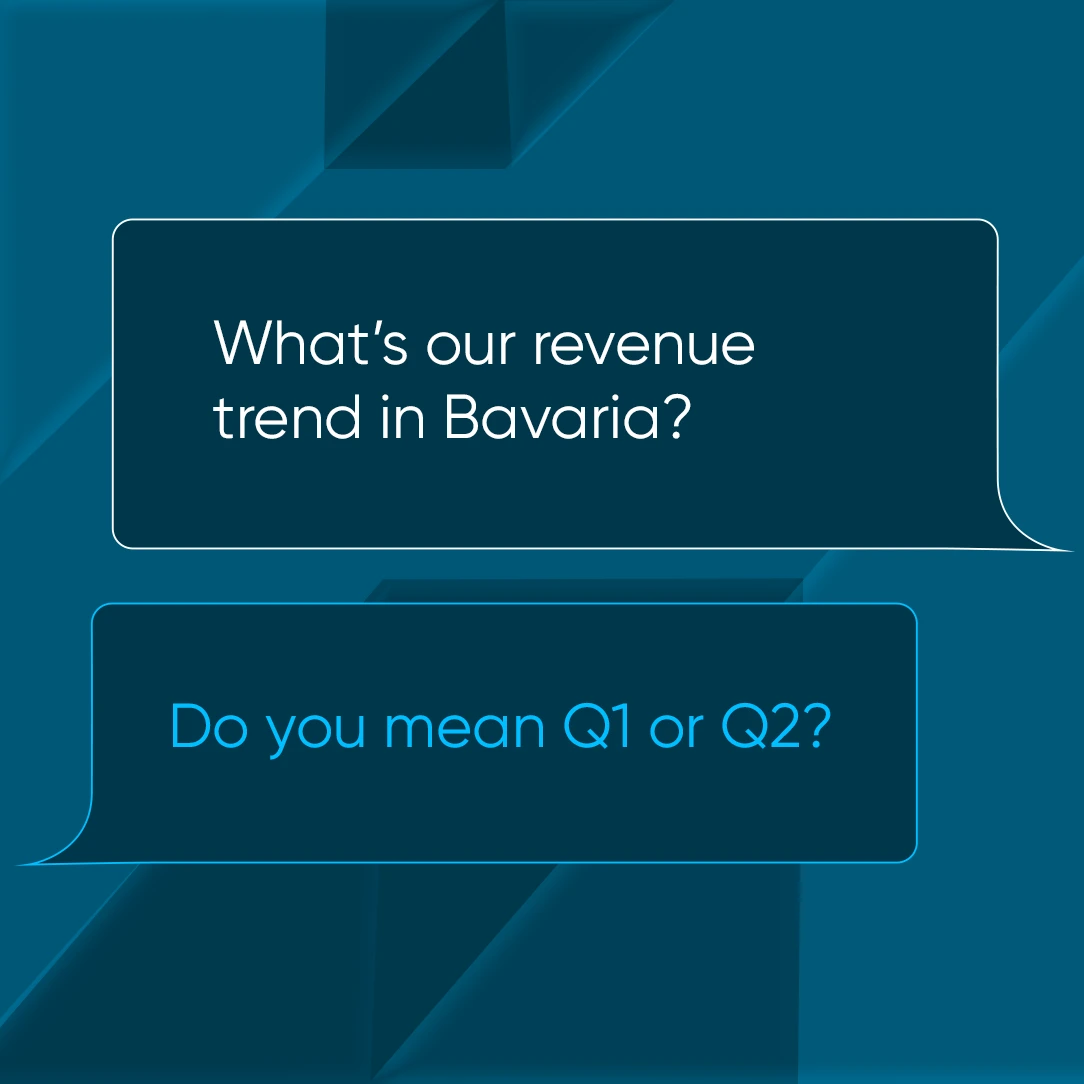
Databricks AI/BI Genie and the Future of Business Intelligence
We are witnessing a new wave in Business Intelligence (BI): the line between traditional dashboarding and natural data interaction is blurring.

Crime Scene: White Goods, Red Numbers
The Loading Dock - a Data Crime Story about Missing Controls, Alibis, and the Forensic Tracing of Numbers

Microsoft Fabric is Convenient – But Convenience Comes at a Price
Microsoft Fabric is currently being hailed as the new all-in-one solution in the BI universe. A platform that unites integration, transformation, and reporting in one interface, promising to finally eliminate data silos, system breaks, and complex architectures.

Pretty Charts: Why Hichert’s Principles Still Matter in Modern BI
BI has evolved dramatically. We now have AI-assisted forecasting, anomaly detection, and self-service tools at every manager’s fingertips. And yet, in most organizations, dashboards are more complex - not more useful. Executives don’t want visual fireworks. They want clarity. That’s why Hichert’s IBCS principles, developed long before “augmented analytics” became a buzzword, remain highly relevant today.

The Real Bottleneck in Business Intelligence Isn’t Data. It’s People.
Business Intelligence (BI) has never had more powerful tools. Platforms like Microsoft Fabric, Databricks, and Qlik deliver integrated pipelines, governance, and AI-driven insights at a scale that was unthinkable only a few years ago. And yet, many BI projects still fail. Not because the data is broken, but because the people side of BI is neglected. Here’s the leadership journey every BI initiative goes through, and the points where most stumble.

The Impact of the EU AI Act on Business Intelligence
The EU’s Artificial Intelligence Act is the world’s first comprehensive AI law, and while it doesn’t regulate every dashboard, it has major implications for Business Intelligence once AI features are involved.

Critical Path Thinking: Conducting Your Data Pipelines Like an Orchestra
The CFO doesn’t care if 200 tables reload on time. He cares if the P&L is ready before the board call. That’s the critical path. Your data’s conductor.

Treat the Problem, not the Symptoms: Common Mistakes in Data Cleansing
When numbers don’t add up, many teams reach for the same cure: cleansing scripts. They patch nulls, deduplicate rows, and standardize values downstream. It works. But only on the symptoms. The root problems remain. And the “data debt” keeps growing.
Data Governance and the Single Source of Truth
Companies often come to us because their reporting doesn’t add up. Dashboards contradict each other, KPIs are inconsistent, and the root cause is almost always assumed to be technical.

AI is a Bubble
So was the Internet. For weeks I’ve been saying internally that this might be the summer of decision. Not only because of the ongoing economic uncertainty, but also because of the question: how will AI adoption move forward? With the release of GPT-5, i feel confirmed in my view: AI is a bubble.

Can you feel the AGI
What Ilya saw. Ilya Sutskever, former Chief Scientist at OpenAI, once described a moment where interacting with an AI changes in feel.Not because the model suddenly became smarter overnight but because the experience shifts from “I’m prompting a tool” to “I’m collaborating with a thinking partner.”We’re starting to see exactly what he meant.

BARC Power BI Map
BARC presents the Power BI map, the "world's most comprehensive guide to the Power BI ecosystem," covering tools and service providers around Microsoft Power BI.

ETL vs ELT
ETL und ELT sind Datenintegrationsmethoden, die dazu dienen, Informationen aus mehreren Quellen in einem zentralen Datenspeichersystem zu konsolidieren.

What is Business Intelligence?
Business Intelligence (BI) refers to the process of collecting, evaluating, analyzing, and visualizing data. BI encompasses a wide range of tools, applications, and methodologies that enable users within organizations to make informed decisions based on their data. Both current and historical data are analyzed and presented through clear, comprehensible reports, dashboards, and charts. This descriptive analysis offers insights into a company's current and past performance.

Data Mesh
Data Mesh architecture is a decentralized Data Management approach that organizes data across individual business domains.

Supply Chain Due Diligence Act
On January 1, 2023, the Supply Chain Due Diligence Act (Lieferkettensorgfaltspflichtengesetz - LKSG) came into effect. The law introduces strict regulations to ensure ethical standards across global supply chains, particularly regarding child labor, wage standards, and environmental protection.

Data Lakehouse
A Data Lakehouse is an innovative, open data management architecture combining the advantages of both Data Lakes and Data Warehouses. It merges the flexibility, scalability, and cost-effectiveness of Data Lakes with the structured data management features of Data Warehouses.

Data Lake
A Data Lake captures, stores, and processes vast amounts of data in its original formats.

Data Architecture
Effective data management is essential for long-term growth in successful companies. But what exactly is data architecture, and why is it so important?

Data Warehouse
A Data Warehouse is a centralized database designed to collect, transform, and aggregate structured data from various sources such as ERP systems, CRM platforms, databases, and external systems. It serves as a consistent, optimized storage hub for facilitating rapid and efficient data querying and analysis, providing a solid foundation for Business Intelligence, reporting, and analytics.

Data Lake vs Data Warehouse
Data Lakes and Data Warehouses (DWH) are two distinct approaches to data storage. While a Data Lake stores unstructured (raw) data, a Data Warehouse holds structured and processed data. In this article, we provide a comprehensive overview of the differences between these two technologies.

Data Storytelling
Data Storytelling is the art of communicating effectively with data. It’s not just about what you say, but how you say it.

What is Data Literacy?
Data Literacy refers to the ability to effectively collect, process, analyze, and communicate data. It encompasses understanding how data is generated, stored, and utilized in various formats—empowering individuals and organizations to make informed, data-driven decisions and effectively solve problems.

ESG Reporting
Why your business should start sustainability reporting now.

5 key success factors for your BI project
Business intelligence reduces manual efforts, optimizes business processes, and enhances transparency.

Qlik Cloud - the future-proof data platform
What exactly is Qlik Cloud from the data and analytics provider? What are the benefits of using cloud technology for your business, and how does it differ from the traditional on-premise version?

Selected – inics becomes Qlik select partner
We are delighted and a little proud... This is a great achievement and milestone reflecting our efforts over the past three years since founding inics GmbH.

Transition to Qlik subscription licensing
Qlik subscription only - the end of Qlik purchase/perpetual licensing? From April 2021, new Qlik licenses can only be purchased via the subscription model. This applies to Qlik Sense, QlikView, Qlik Data Integration, and so on.